Relocating to the Pacific coast of Costa Rica for a few months or a year requires a shift in perspective regarding how you secure housing. While the Quepos and Manuel Antonio region is globally recognized for its tourism, the rules for long-term residency are fundamentally different from those of a short-term holiday. Navigating the local rental market involves understanding specific legal protections and customary practices that vary from North American or European standards. Many foreigners arrive expecting a seamless digital booking process, only to find that the most stable long-term options operate through local networks. Understanding the distinction between a vacation stay and a residential lease is the first step toward a successful transition. This guide provides the practical details necessary to secure a furnished apartment while protecting your legal and financial interests.
Why Quepos rents differently from a vacation booking
The most critical distinction to understand is the legal boundary between a vacation rental and a residential lease. In Costa Rica, stays of 30 days or less are classified as vacation rentals. These arrangements fall outside the protections of the national rental law and are typically handled through platforms like Airbnb or VRBO, where prices are higher and terms are flexible. Once your stay exceeds 30 days, you enter the realm of residential leasing, which is governed by the General Law of Urban and Suburban Leases (Ley 7527).
Vacation rentals are priced for the short term and often include all utilities and services in a single flat fee. Long-term rentals, however, are priced lower per month but shift the responsibility of utility payments to the tenant. Furthermore, while a vacation rental is a simple transaction, a long-term lease creates a legal relationship between you and the landlord with specific rights and obligations. You cannot simply treat a three-month stay as a series of monthly hotel bookings if you wish to have legal stability and fair pricing.
The market in Quepos is also less digitized than in major cities. While some properties are listed online, many of the best long-term rentals are never advertised on global websites. They are found through word-of-mouth, local Facebook groups, or by driving through neighborhoods and looking for “Se alquila” signs. This means that finding a quality furnished apartment often requires physical presence in the area and a willingness to network with neighbors.
Furnished monthly rental or a traditional lease
When searching for housing, you will encounter two primary types of arrangements: the informal monthly furnished rental and the formal traditional lease. An informal arrangement is often a “handshake” deal where you pay a monthly fee for a furnished space. While this offers flexibility, it provides very little legal protection. If the landlord decides to sell the property or rent it to a higher-paying tourist during the peak season, you may find yourself with very little notice to vacate.
A traditional lease, documented in writing and based on Ley 7527, provides a structured framework. For foreigners, a formal lease is highly recommended because it defines the terms of the deposit, the rent increase limits, and the notice period for termination. Even if you only intend to stay for six months, having a written contract ensures that the landlord cannot arbitrarily raise the rent or change the terms of your stay.
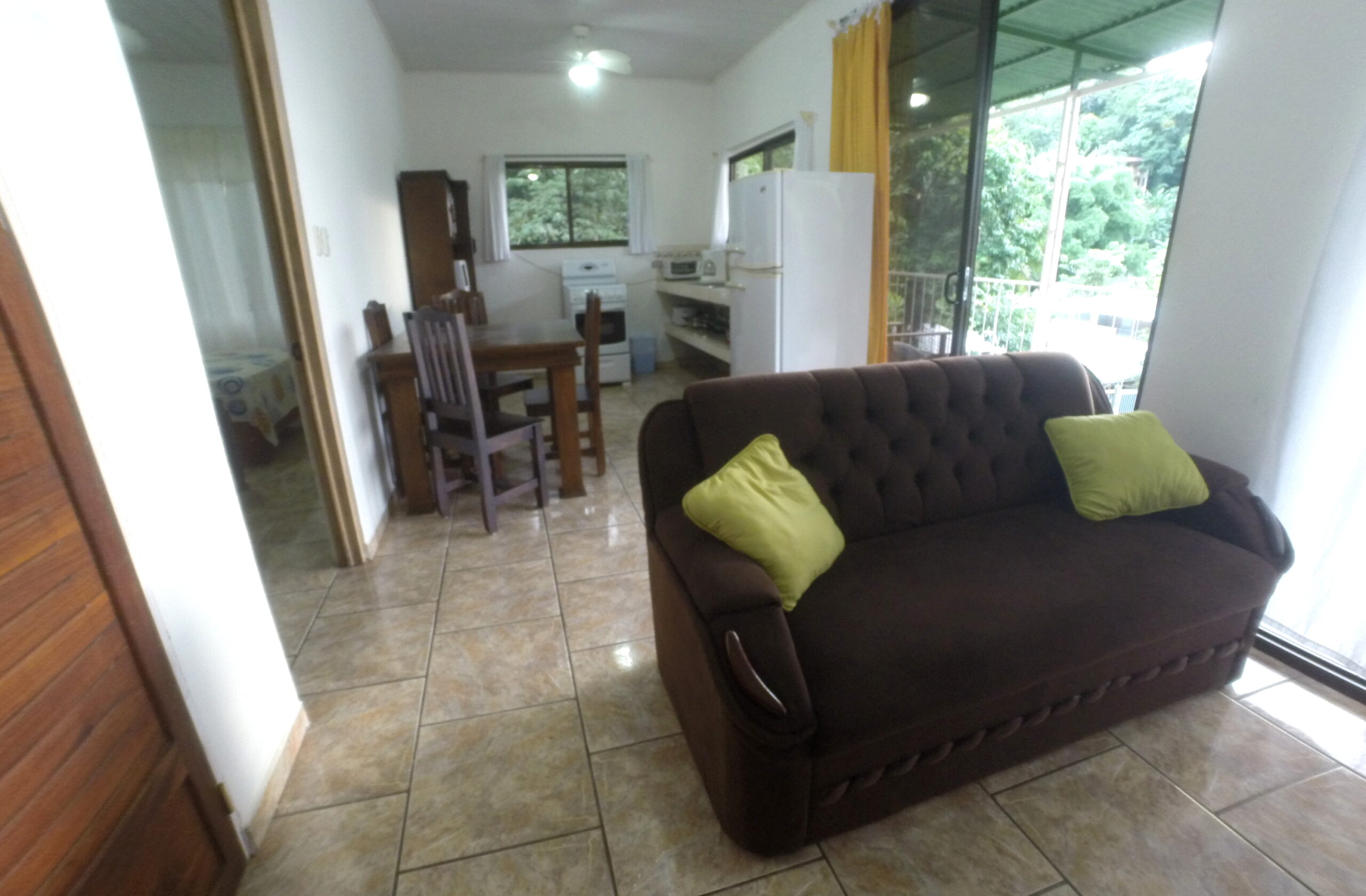
Furnished apartments are common in the Quepos and Manuel Antonio area, especially for those arriving from abroad. These typically include basic appliances, beds, and kitchenware. However, the quality of furnishings varies wildly. It is important to distinguish between a “furnished” apartment that includes only a mattress and a table, and one that is fully equipped for long-term living. Always request a detailed inventory list as part of your lease to avoid disputes over missing items when you eventually move out.
The three-year rule, explained simply
One of the most surprising aspects of Costa Rican law for foreigners is the minimum term for residential leases. Under the General Law of Urban and Suburban Leases, the law sets a minimum term of three years for housing. This applies even if your written contract explicitly states a term of twelve months or less.
This law is designed to protect tenants from sudden eviction. However, this does not mean you are trapped in a property for three years. The tenant has the right to leave the property earlier by giving the landlord proper notice. In the Quepos area, the customary notice period is around three months, although your specific contract may set a more favorable term. If you provide the required notice, you can terminate the lease without penalty.
Landlords are aware of this law, and some may try to bypass it by labeling the contract as a “service agreement” or a “vacation extension.” Be cautious of these labels. If the property is your primary residence, the law generally views it as a residential lease regardless of the title of the document. Understanding that the law favors the tenant’s stability allows you to negotiate from a position of knowledge.
Deposits, advance rent and the IVA threshold
Financial transparency is essential when signing a lease. In Costa Rica, the customary security deposit is one month of rent. This deposit is held by the landlord to cover potential damages or unpaid utilities at the end of the lease. It is important to ensure the contract specifies the conditions for the return of this deposit.
Regarding upfront payments, the law is strict: a landlord cannot require more than one month of rent in advance for housing. If a landlord asks for three or six months of rent upfront, they are operating outside the standard legal framework for residential leases. While you may choose to pay in advance for your own convenience, you are not legally obligated to do so beyond the first month.
You must also be aware of the Value Added Tax, known as IVA. A 13% IVA applies to residential rent only when the monthly rent exceeds 1.5 times the official base salary. If the rent is at or below this threshold, it is exempt from IVA. This threshold is set in colones and is updated annually by the government. When negotiating your rent, ask the landlord clearly if the quoted price includes IVA or if it is exempt based on the current salary threshold.
Currency choice also impacts your financial stability. Rent agreed in US dollars stays fixed for the whole lease term. If you agree to pay in colones, the landlord may raise the rent once a year, but this increase is capped by the previous year’s inflation rate. Most foreigners prefer US dollar contracts to avoid currency fluctuations and unexpected annual increases.
What rent actually costs in Quepos and Manuel Antonio
Rental prices vary significantly based on the location, the view, and the level of amenities. In the general Quepos and Manuel Antonio area, typical furnished monthly rents for 2026 fall into specific brackets. For a one-bedroom apartment, expect to pay between USD 700 and 1,200. A two-bedroom apartment typically ranges from USD 1,000 to 1,600.
If you choose to live within the town of Manuel Antonio itself, prices are higher due to the proximity to the National Park and the high demand from tourists. Long-term rents in Manuel Antonio typically range from USD 1,000 to 2,200. These properties often command a premium for ocean views or proximity to the beach.
It is important to remember that property taxes are the landlord’s obligation. If a landlord asks you to contribute to the property tax as a condition of the lease, this is not standard practice and should be questioned. Your rent should cover the right to occupy the space; the ownership costs remain with the owner.
Utilities, internet and the real monthly total
The monthly rent is only one part of your cost of living. In almost all long-term residential leases, utilities are paid by the tenant. This includes electricity, water, internet, and cooking gas. You should budget for these separately to avoid surprises at the end of the month.
Electricity is often the largest variable expense. On the Pacific coast, air conditioning is a significant power draw. Depending on usage and the efficiency of the unit, air conditioning can add roughly USD 100 to 250 to your monthly electricity bill. If you plan to run the AC throughout the night, your utility costs will be at the higher end of this spectrum.
Internet is a critical utility for remote workers. Do not assume that because a town has fiber optic coverage, your specific apartment does too. You must confirm that the internet reaches the house, not only the town. The best practice is to run a speed test at the property using your own device before signing the lease.
Brunxu Apartments offers furnished studios as well as one- and two-bedroom apartments for monthly rentals located between Quepos and Manuel Antonio. You can view current rental rates at https://brunxu.com/rental-rates or contact them via WhatsApp at +506 8853 8245.
What to inspect before you sign
Before committing to a lease, a thorough physical inspection is mandatory. The tropical climate of Costa Rica presents specific challenges that can affect your quality of life. First, check the ventilation and look for signs of mold on the walls and ceilings. Mold is common in the humid Pacific region, and poor ventilation can make an apartment uninhabitable during the green season.
Water is another critical point of inspection. Ask about water pressure and whether the area experiences water cuts during the dry season. In some parts of Quepos and Manuel Antonio, water scarcity can be an issue from January to April. Additionally, verify how the water is heated. Many homes in Costa Rica heat water only at the shower head using an electric heater, rather than having a central hot water tank.
If the property is located on a hillside between Quepos and Manuel Antonio, evaluate the access road. Many of these roads are unpaved and can become impassable for small cars during the green season, which runs roughly from May to November. September and October are the wettest months. If you do not have a 4×4 vehicle, ensure the road is paved or well-maintained enough for your car to handle the rain.
Finally, consider the timing of your visit. The area looks very different in January than it does in October. If possible, visit the area in both the dry season and the green season to understand the environmental impact on the property and the accessibility of the roads.
The mistakes that cost foreigners the most
The most expensive mistake a foreigner can make is confusing a rental contract with an immigration document. A rental contract does not grant immigration status. Whether you are renting for one month or three years, your legal right to stay in the country is determined by your passport and your visa status. Many nationalities can enter as tourists for up to 180 days, but the exact number of days is decided by the officer at the border.
For remote workers, Costa Rica offers a digital nomad stay that allows for one year, renewable once. To qualify, you must earn at least USD 3,000 a month (USD 4,000 if accompanying family) from a source outside of Costa Rica and provide proof of health insurance. Failing to secure the correct legal status while relying on a lease can lead to fines or issues when exiting the country.
Another common mistake is relying solely on online listings. By ignoring the local “Se alquila” signs and local Facebook groups, many foreigners end up paying “tourist prices” for long-term stays. Taking the time to explore the neighborhoods of Quepos and speaking with locals often reveals higher-quality apartments at more reasonable rates.
Lastly, neglecting the “small print” regarding utility transfers can be costly. Ensure that the electricity and water meters are read on the day you move in. If the previous tenant left a large unpaid balance, you do not want to be held responsible for those costs when the utility company eventually collects.
Frequently asked questions
How do I get around if I don’t have a car?
While a car is highly recommended for exploring the region, there is a reliable local bus system. The bus between Quepos and Manuel Antonio runs roughly every 30 minutes during the day, providing a cost-effective way to move between the two main hubs.
Is it safe to pay the deposit in cash?
It is always better to have a paper trail. Use bank transfers or checks, and always obtain a signed receipt that clearly states the amount paid and the purpose of the payment (e.g., “Security Deposit for Apartment X”).
What happens if the landlord wants to end the lease early?
Because residential leases are governed by Ley 7527, landlords cannot arbitrarily evict tenants without legal cause. If the landlord wishes to end the lease, they must follow the legal procedures outlined in the law, which generally protect the tenant’s right to occupy the property for the agreed term.
Can I sublet my furnished apartment?
Subletting is generally prohibited unless explicitly permitted in the written lease. Attempting to sublet a long-term rental as a short-term vacation rental is a common cause of lease termination and legal disputes in the Quepos area.
How do I handle repairs and maintenance?
Under the law, the landlord is responsible for maintaining the property in a habitable condition. This includes structural repairs and ensuring the plumbing and electrical systems function. It is advisable to document the condition of the apartment with photos upon arrival to ensure you are not blamed for pre-existing damage.