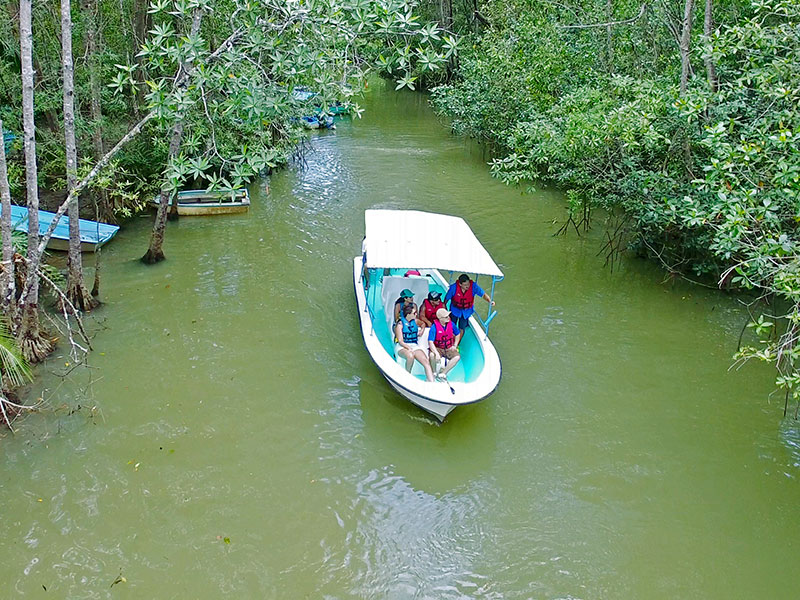
Kayaking the Damas mangroves is a slow paced excursion through a complex network of saltwater channels. This tour allows you to explore a vital coastal ecosystem while observing local wildlife from a stable boat.
Where the Damas estuary is
The Damas estuary is located north of Quepos on the central Pacific coast of Costa Rica. It is a place where the river meets the Pacific Ocean, creating a maze of mangrove channels that protect the shoreline.
Visitors can reach this area easily from their accommodation. If you are staying at Brunxu Apartments, you are positioned on the hill road between Quepos town and Manuel Antonio, making it a convenient base for trips to the estuary.
The location is distinct from the sandy beaches of the nearby national park. It offers a different perspective of the Puntarenas province by focusing on the brackish waters and dense forests of the coast.
Why the tide decides your departure time
The geography of the Damas estuary is heavily influenced by the movement of the ocean. Because the channels are shallow, the water level changes significantly throughout the day based on the tide.
Low water levels can close off certain channels entirely, making them impassable for kayaks. To ensure you can navigate the deeper parts of the maze, tours are scheduled to run with the incoming or outgoing tide.
This means that departure times are not fixed and will change from day to day. You should confirm the exact timing of your trip with your tour provider at the time of booking.
Planning your day around the tide is a standard part of mangrove kayaking in Costa Rica. It ensures that the guide can take you through the most interesting parts of the nursery without getting stuck in the mud.
What you will see in the mangroves
The mangrove forest acts as a nursery for many marine species. As you paddle through the channels, your guide will explain how this ecosystem supports the wider ocean environment.
You can expect to see various types of birds and crabs along the muddy banks. Monkeys are also common residents of the canopy and often move between the trees above the water.
The vegetation itself is a primary attraction. You will see the complex root systems of the mangroves that filter the water and provide shelter for young fish.
The variety of wildlife often depends on the time of year and the weather. You can find more ideas for local sightings in our guide to the best things to do in Quepos and Manuel Antonio.
Paddling effort and who can do it
The tour uses sit on top kayaks which are designed for stability. These boats are wide and difficult to tip, making them suitable for people who are not experienced paddlers.
The pace of the trip is quiet and slow. You are not racing against the current, but rather gliding through the channels to observe the surroundings.
Because a guide accompanies the group, you will receive instructions on how to paddle efficiently. The effort required is moderate and manageable for most fitness levels.
Children and seniors can typically participate as long as they can sit comfortably in the kayak. You should discuss any specific physical limitations with the operator before you book.
What to bring
Protection from the sun is essential for a day on the water. You should bring a hat, sunglasses, and apply biodegradable sunscreen to protect your skin.
Clothing should be lightweight and quick drying. Many visitors choose to wear athletic gear or swimwear that can handle a few splashes of water.
Drinking water is necessary to stay hydrated during the excursion. Depending on the tour operator, you may be asked to bring your own bottle or a reusable container.
Footwear should be comfortable and secure. Closed toe sandals or water shoes are recommended since you will be stepping in and out of the kayak on muddy or sandy banks.
Wildlife etiquette on the water
The Damas estuary is a working ecosystem and a home to many species. Maintaining a respectful distance from the wildlife is a requirement for all visitors.
You must not touch the mangrove roots. These roots are fragile and essential for the stability of the shoreline and the health of the nursery.
Noise levels should be kept low to avoid stressing the animals. This allows you to see the monkeys and birds in their natural behavior without disturbing them.
Feeding the animals is strictly prohibited. This practice disrupts their natural diet and can make them dependent on humans, which harms their survival in the wild.
After the paddle: the rest of the day
After you finish your kayak trip, you may have time to explore the town of Quepos. The town centre is a hub for local shopping and dining options.
A short walk from the town centre is the Marina Pez Vela. This is a great place to visit, especially during the sailfish season which runs from November to April.
If you have more time, you can visit Manuel Antonio National Park. Remember that the park is closed on Tuesdays and tickets must be bought online through SINAC using a passport or ID.
For those staying longer, you can check adventure tours for other activities. If you are planning your arrival, see our notes on San Jose transportation for bus and airport details.
Frequently asked questions
Do I need kayaking experience?
No previous experience is required for this tour. The guides provide all the necessary instructions and the kayaks are very stable.
Is the water calm?
The water in the mangrove channels is generally very calm. You are protected from the ocean waves by the forest and the estuary geography.
Can I take photographs?
You are welcome to take photographs of the scenery and the wildlife. We recommend using a waterproof case or a strap to keep your camera secure.
What if I cannot swim?
The tour is conducted in stable boats and guides are present. You will be provided with a life jacket to ensure your safety on the water.
The weather in the region varies between the dry season from December to April and the green season from May to November. You can find more details on Quepos weather to help you pack. For booking information or questions about your stay, contact Brunxu via WhatsApp at +506 8853 8245.