Most visitors try to see everything in four days and end up exhausted. The area rewards a slower plan: one long morning in the park, two half days on the water, and afternoons left open for the rain.
Start with the park, but start early
Manuel Antonio National Park is the most visited national park in Costa Rica. Established in 1972, it covers 1,983 hectares of land and 25,634 hectares of marine area.
The park is closed on Tuesdays. Tickets are sold online only through SINAC and require a passport or ID number, so you should buy them before you arrive at the gate.
The environment is hot and humid. You should start your visit early in the morning to avoid the midday heat and the largest crowds.
While some trails are accessible and the main paths are short, the humidity can be taxing. Wear light clothing and carry plenty of water.
The biodiversity is significant, with 109 species of mammals and 184 species of birds. You can expect to see two-toed and three-toed sloths, iguanas, basilisks, and coatis along the trails.
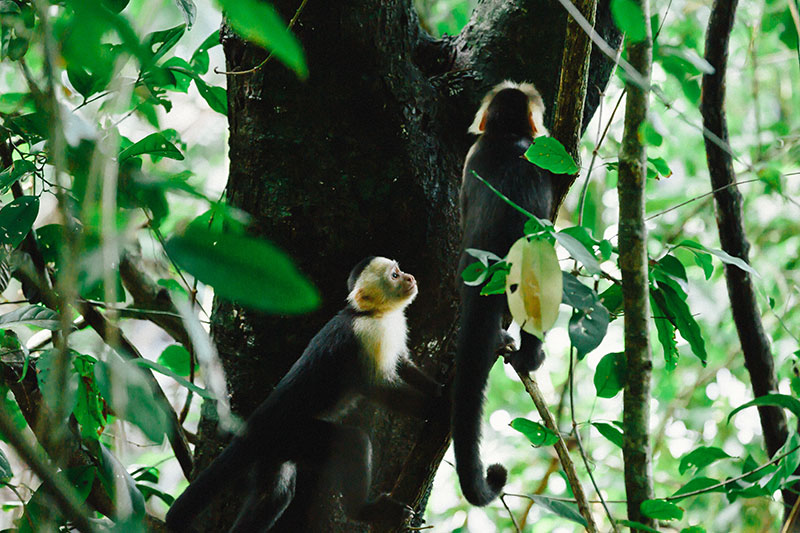
The park is also home to three of the country’s four monkey species. Look for the howler, squirrel monkey, and white-faced capuchin in the canopy.
The beaches, inside the park and outside it
The park contains four distinct beaches: Manuel Antonio, Espadilla Sur, Tesoro, and Playita. These areas allow you to transition from the jungle directly to the sand.
Many visitors remember the walk across the tombolo that connects the mainland to Punta Catedral. This is one of the most recognizable landmarks in the region.
Outside the park, the coastline offers different experiences. The beaches are accessible and provide a way to relax after a morning of hiking.
Wildlife is not confined to the protected boundaries of the park. If you stay at Brunxu, you will see monkeys, sloths, and iguanas passing through the gardens and rooftops of the buildings on the hill.
On the water: marina, mangroves and catamarans
Marina Pez Vela in Quepos is a working marina. It features various restaurants and offers sport-fishing charters for those interested in the local industry.
Sailfish season typically runs from November to April. This is the primary time for fishing enthusiasts to visit the marina.
Boat tours are available from the marina as well as from Damas and Isla Damas. These excursions offer a different perspective of the coastline.
You can choose from several activities depending on your interest. Options include exploring mangrove estuaries, birdwatching, snorkelling, kayaking, and catamaran sailing.
Catamarans are a popular choice for groups. They often combine sailing with opportunities to see the coast from the water.
What to do on a wet afternoon
The green season runs from May to November. September and October are the wettest months of the year.
Rain usually arrives in the afternoon or at night rather than lasting all day. You should plan your outdoor activities for the morning.
When the rain starts, it is a good time to visit the local shops in Quepos or relax at your apartment. This is a natural part of the tropical rhythm.
You can use this time to organize your photos or plan the next day’s route. The rain often cools the temperature, making the evening more comfortable.
The feria and the everyday side of Quepos
The farmers market, known as the feria, is where locals buy their fruit and vegetables. It is a central part of the community’s weekly routine.
Prices at the feria are generally cheaper than at the supermarket. It is worth a visit even if you are not planning to cook your own meals.
Quepos serves as the regional hub. It contains a public hospital, banks, and the regional airport at La Managua.
The town provides the essential infrastructure that supports the tourism in Manuel Antonio. It is the best place to handle banking or medical needs.
Eating well without spending much
Dining options in the area range from simple to upscale. Sodas are small, local eateries where a typical lunch costs between US$6 and US$10.
For those seeking a more formal experience, there are mid-range restaurants. A dinner for two with a drink in these establishments typically costs between US$40 and US$80.
Eating at sodas is the best way to experience authentic local flavors. These spots are common throughout both Quepos and Manuel Antonio.
You can find a variety of restaurants depending on whether you want a quick bite or a slow evening meal.
A five-day plan that does not exhaust you
Day one should be dedicated to settling in. Walk around your immediate neighborhood and observe the wildlife in the gardens.
Day two is for the national park. Start early to see the monkeys and sloths, then spend the afternoon at Manuel Antonio beach.
Day three focuses on the water. Visit Marina Pez Vela in the morning and take a catamaran or kayak tour of the mangroves.
Day four is for the local culture. Visit the feria in Quepos to buy fresh fruit and explore the town center.
Day five can be a flexible day. You might return to a favorite beach or take a short trip to a nearby viewpoint before preparing for departure.
What to skip, and why
Avoid trying to visit the national park on a Tuesday. The park is closed, and you will find the entrance blocked.
Do not wait until you arrive at the park gate to buy your tickets. Because tickets are sold online only through SINAC, you will be unable to enter without a prior reservation.
Avoid scheduling heavy outdoor activities for September and October afternoons. The rain is most frequent during these months and can disrupt your plans.
Do not feel the need to rent a car for every single trip. The distance between the main hubs is short, and other options are available.
Getting around without a car
The local bus between Quepos and Manuel Antonio is an efficient option. It runs roughly every 30 minutes and costs a few hundred colones.
Taxis are available and provide a faster door-to-door service. However, these costs can add up over a long stay.
For those traveling from the capital, the bus terminal in Quepos offers services to San Jose via Tracopa. The trip costs about US$12.50 and takes between three and a half to four and a half hours.
Walking is viable for short distances within the towns. However, the heat makes the bus or taxi more practical for longer stretches.
Frequently asked questions
Do I need a guide in Manuel Antonio?
While not required, guides can help you spot smaller animals and explain the ecology of the park.
Can I visit the park without a reservation?
No. Tickets are sold online only through SINAC and must be purchased before you arrive.
Is the beach at Manuel Antonio free?
Access to the beach is part of the national park, so you must pay the park entrance fee to reach it.
What should I pack for a day in the park?
Pack water, sunscreen, comfortable walking shoes, and your passport or ID for ticket verification.
Whether you are visiting for a few days or staying for a month, we are here to help you settle in. Contact Brunxu via WhatsApp at +506 8853 8245 for any assistance with your stay.