Choosing a destination for remote work requires a balance between lifestyle, legal requirements, and professional stability. For those comparing options like Mexico, Portugal, or Colombia, Costa Rica offers a specific set of advantages for those with clients in North America.
What changed after 2021
Before 2021, remote workers typically entered Costa Rica as tourists. While this worked for short stays, it provided no formal legal framework for those wanting to stay longer while maintaining their foreign employment.
The landscape changed with the introduction of Law 10008. This legislation recognized the growth of the global remote workforce and created a dedicated path for digital nomads to reside in the country legally.
This shift moved Costa Rica from being a destination for short vacations to a viable hub for long term professional stays. It provided a structured way for freelancers and employees to manage their stay without relying solely on tourist extensions.
The legal side: the digital nomad visa explained
The digital nomad visa is designed for individuals who earn their income from sources outside of Costa Rica. To qualify, you must provide documentation showing a monthly remote income of at least US$3,000 for a single person or US$4,000 for a family.
Applicants must also hold medical insurance that provides coverage of approximately US$50,000. Once granted, the visa is valid for one year and can be renewed once, allowing for a maximum stay of two years.
The primary fiscal attraction of this visa is the tax exemption. While Costa Rica generally taxes residents on their worldwide income, holders of the digital nomad visa are exempt from Costa Rican income tax on money earned abroad.
It is important to understand that a rental contract does not grant you immigration status. Similarly, the digital nomad visa is a specific legal status and does not replace other forms of residency.
Time zones that work with clients in the Americas
One of the most practical reasons for choosing Costa Rica is the time zone. The country operates on Central Standard Time (UTC-6) all year round and does not observe daylight saving time.
This alignment is ideal for those with clients in the United States and Canada. Depending on the season, you will be only one hour behind New York in the winter and two hours behind in the summer.
This allows you to maintain a standard workday that overlaps almost entirely with North American business hours. You can attend morning meetings and respond to emails in real time without waking up in the middle of the night.
In contrast, working with clients in Europe requires more planning. Europe is typically six to eight hours ahead of Costa Rica, which often means your workday begins as their workday is ending.
Connectivity: what to expect from internet
Reliable internet is the baseline for any remote worker. In the Quepos and Manuel Antonio area, the infrastructure consists mostly of fibre and cable provided by a few different companies.
Internet speeds are not uniform across the region. Because speeds vary street by street, the only reliable way to ensure a connection meets your needs is to test the speed at the specific address where you will be staying.
For backup connectivity, mobile data is a reliable option. Prepaid plans are inexpensive, and using a local SIM or eSIM is a practical way to handle calls and video meetings if your primary connection fails.
When searching for long term rentals in Quepos, always ask for a recent speed test result before signing a contract.
Cost: what a month in Costa Rica actually costs
Budgeting for a month in Costa Rica depends on your lifestyle, but there are general benchmarks. A furnished one bedroom apartment in the Quepos area typically rents for between US$700 and US$1,200 per month.
If you require more space, a two bedroom apartment usually ranges from US$1,000 to US$1,600. You should budget an additional US$80 to US$180 for electricity and water, and US$40 to US$70 for internet if it is not included in the rent.
Food costs vary by your choice of dining. Groceries for one person average between US$250 and US$450 a month. For a cheap and authentic meal, a lunch at a local soda costs between US$6 and US$10.
Overall, typical monthly budgets for long stay visitors range from US$1,700 to US$2,500 for one person. You can find more detailed information on rental rates to help plan your budget.
Where nomads base themselves
Depending on your priorities, different regions offer different trade offs between cost, community, and connectivity. San Jose and Escazu are the primary urban hubs, offering the most stability and corporate infrastructure.
Coastal towns like Santa Teresa and Tamarindo are popular for those who prioritize surfing and a high density of other nomads. Uvita is another option for those seeking a slower pace and closer proximity to nature.
The Quepos and Manuel Antonio area is a middle ground. It offers a balance of essential services and nature access without the extreme isolation of some remote beaches.
Each of these locations requires a different approach to budgeting and connectivity. Some offer more community events, while others provide better access to high speed fibre.
Quepos and Manuel Antonio as a base
Quepos serves as the commercial heart of the region. It provides essential infrastructure including banks, supermarkets, a public hospital, and a bus terminal. The regional airport at La Managua is also located here.
Manuel Antonio is located about 7 km away, situated on the hill above the national park. This area is more focused on tourism and nature, providing a quieter environment for those who work from home.
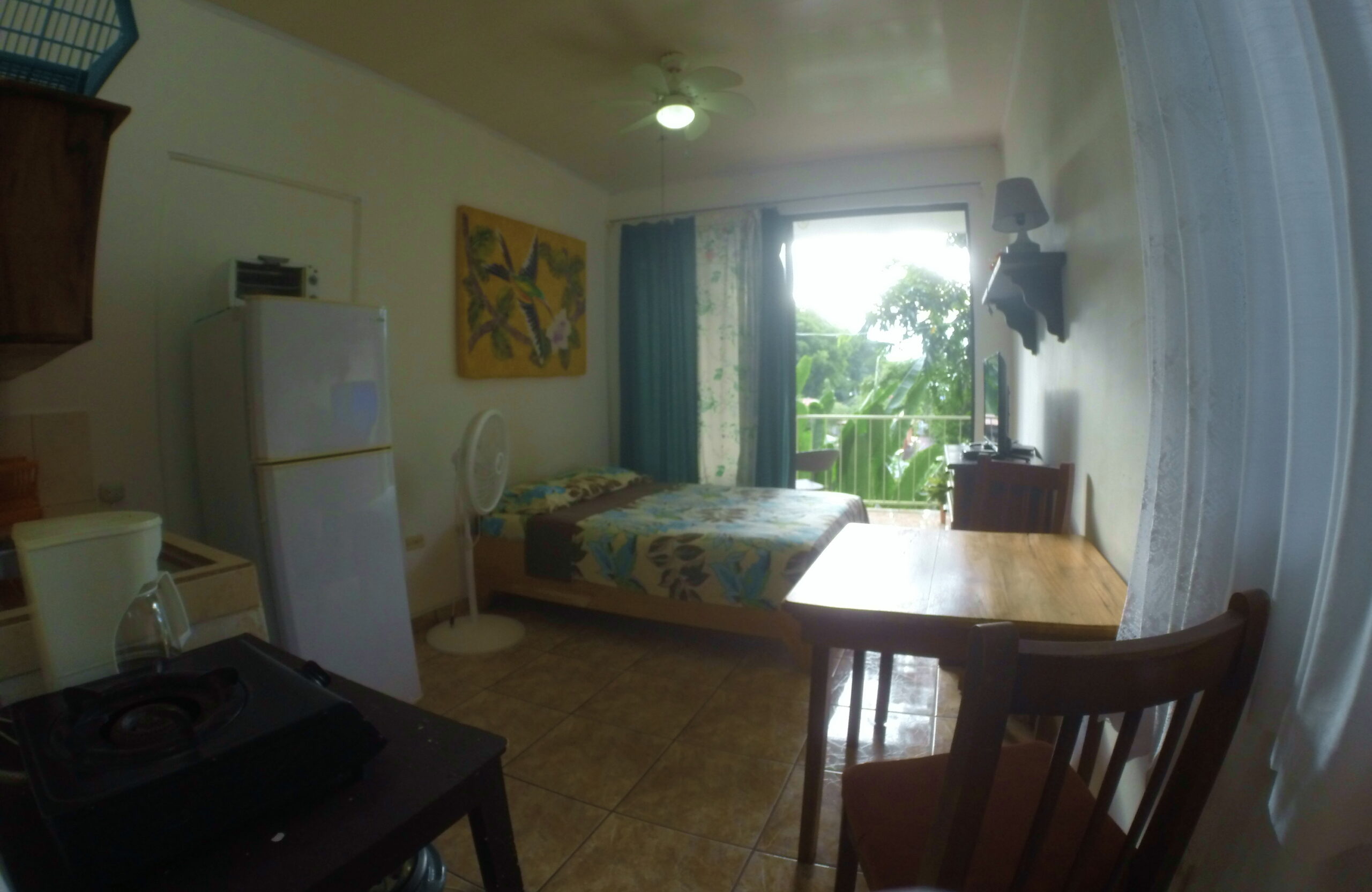
For those looking for a concrete example of a base for a month, Brunxu provides furnished apartments that bridge the gap between the convenience of Quepos and the scenery of the coast.
If you plan to visit the Manuel Antonio National Park, remember that it is closed on Tuesdays. Tickets must be purchased online through SINAC and require your passport number.
You can learn more about the logistics of living in Quepos, Costa Rica to understand the local layout and services.
The trade-offs nobody mentions
While the appeal of Costa Rica is strong, there are practical challenges. The most common reasons nomads choose the country are the time zone, the cost of living, and the access to nature.
However, you must account for the rain. The green season runs from May to November, with September and October being the wettest months. This can affect your mood and your ability to get outdoors.
Bureaucracy in Costa Rica tends to move slower than in North America or Europe. Whether you are dealing with utilities or legal documents, patience is a requirement.
Finally, the need to verify internet is a constant. You cannot assume a property has high speed internet just because it is listed as such. Always request a live test before committing to a lease.
A first month, planned
If you are entering as a tourist, you may stay up to 180 days per entry. The exact length of your stay is decided by the immigration officer at the border, so be clear about your plans.
During your first few weeks, prioritize setting up your connectivity. Purchase a local SIM card immediately upon arrival to ensure you have a data backup for your work calls.
Spend your first weekend exploring the local infrastructure in Quepos. Locate your nearest supermarket and bank to establish a routine that minimizes travel time during your work week.
If you are interested in local landmarks, you can visit the Quepos Marina or plan your transportation from San Jose for future trips.
Frequently asked questions
Do I need the digital nomad visa to work remotely from Costa Rica?
Not necessarily for short stays. Many people work remotely while on a tourist entry, which allows for up to 180 days. The visa is primarily for those who want a formal legal status and tax exemptions for up to two years.
How fast is internet in Quepos?
Speeds vary significantly by street and provider. While fibre is widely available, the only way to know the speed at a specific property is to perform a connection test at that address.
Can I open a bank account in Costa Rica as a nomad?
Opening a bank account can be a slow process involving significant bureaucracy. Most nomads rely on international accounts and local ATMs, or seek professional legal guidance to navigate the requirements.
Is Costa Rica good for working with European clients?
It is more challenging than working with North American clients. Because Europe is six to eight hours ahead, you will likely need to start your workday very early to have overlapping hours with your clients.
If you are ready to plan your stay, you can visit our reservation page or contact Brunxu via WhatsApp at +506 8853 8245.